

Description
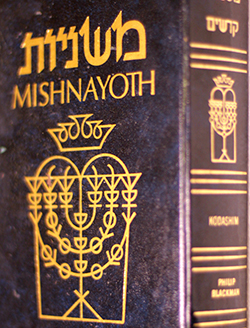
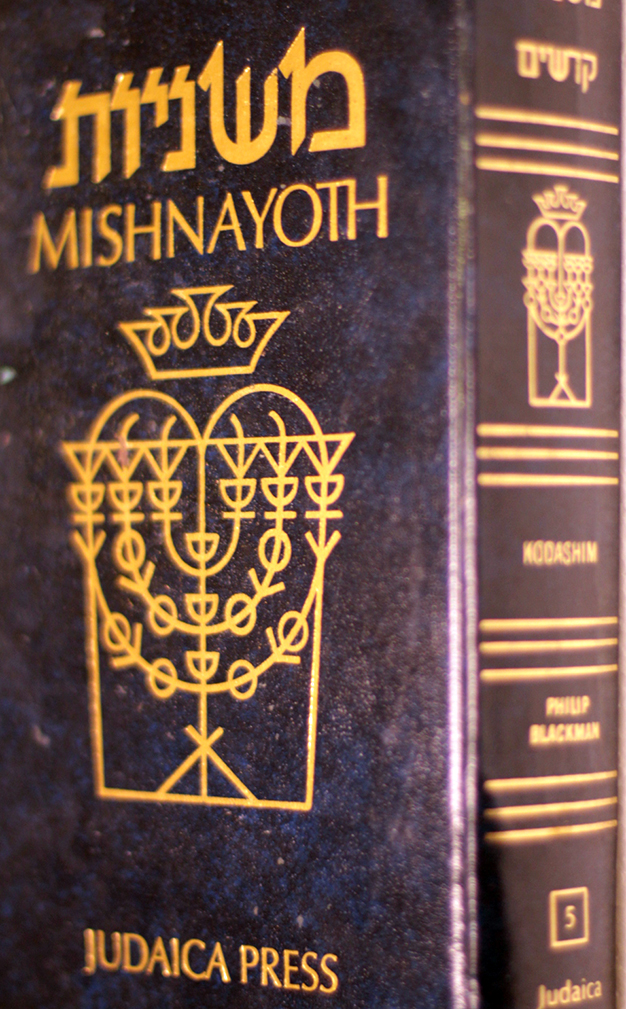
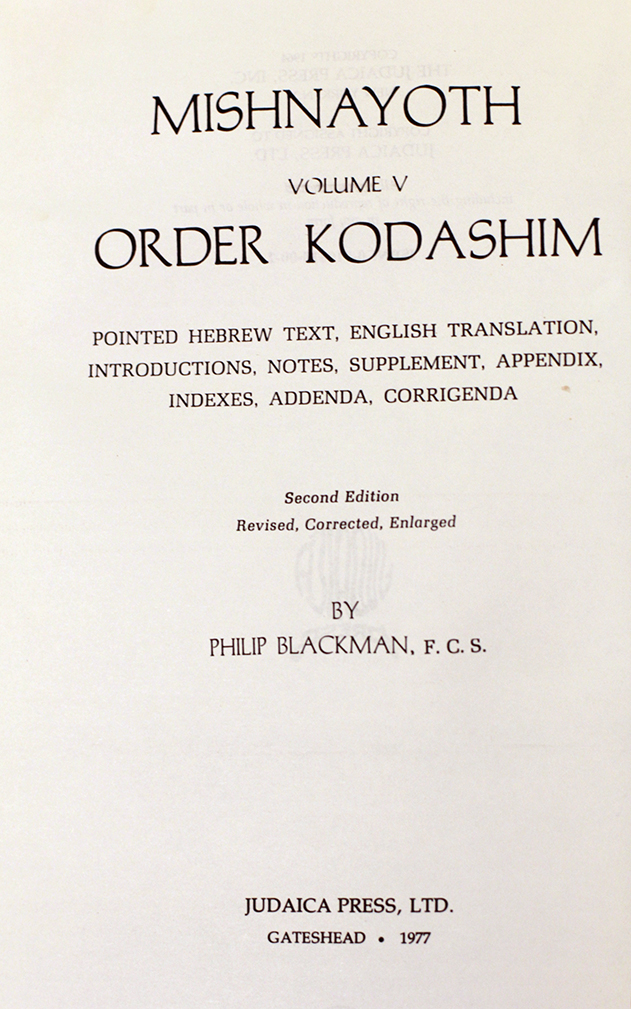
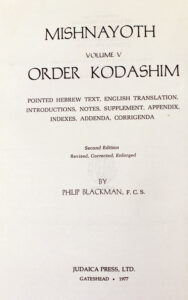
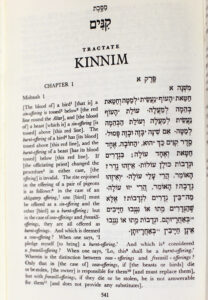
Mishnayoth Order Kodashim Philip Blackman Vol. 5 Judaica Press 1977
Free Shipping. Unmarked and Tight binding
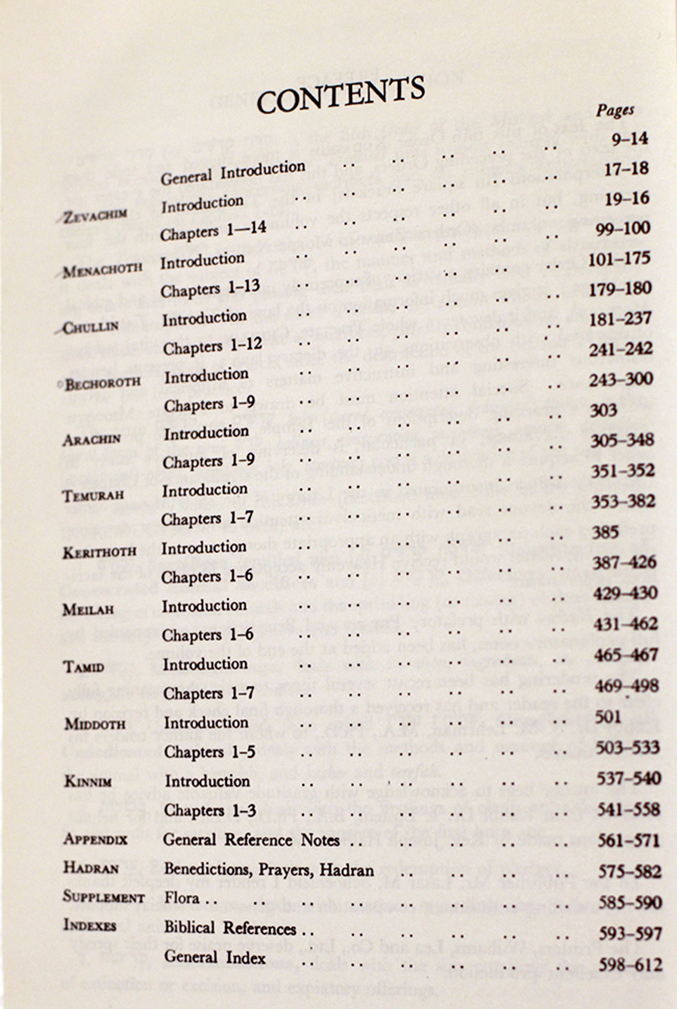
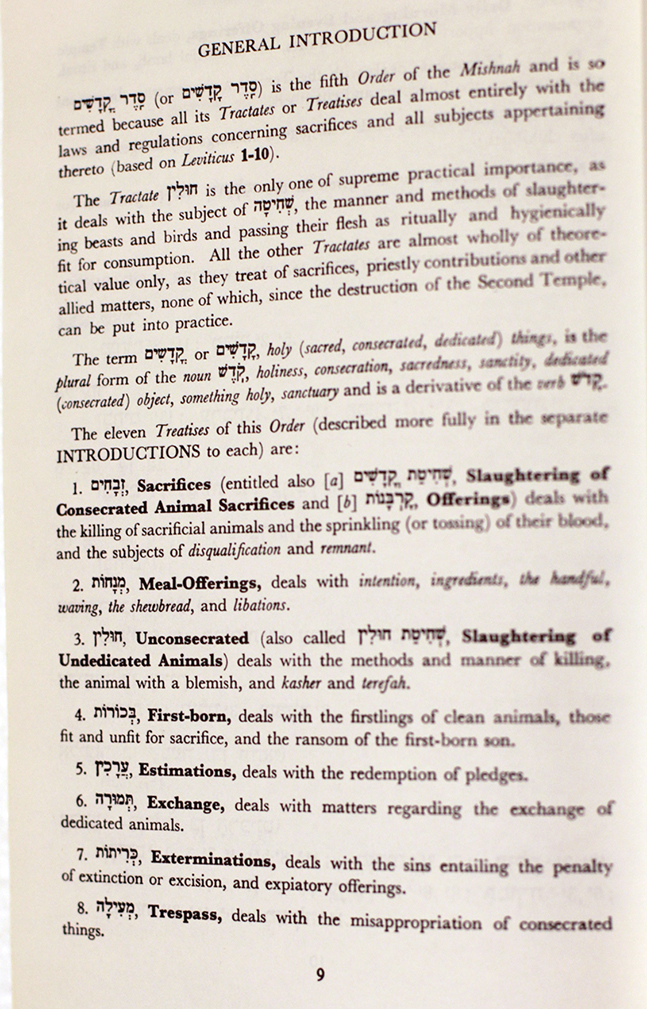
Kodashim (Hebrew: קׇדָשִׁים, lit. ’holy things’) is the fifth of the six orders, or major divisions, of the Mishnah, Tosefta and the Talmud, and deals largely with the services within the Temple in Jerusalem, its maintenance and design, the korbanot, or sacrificial offerings that were offered there, and other subjects related to these topics, as well as, notably, the topic of kosher slaughter.
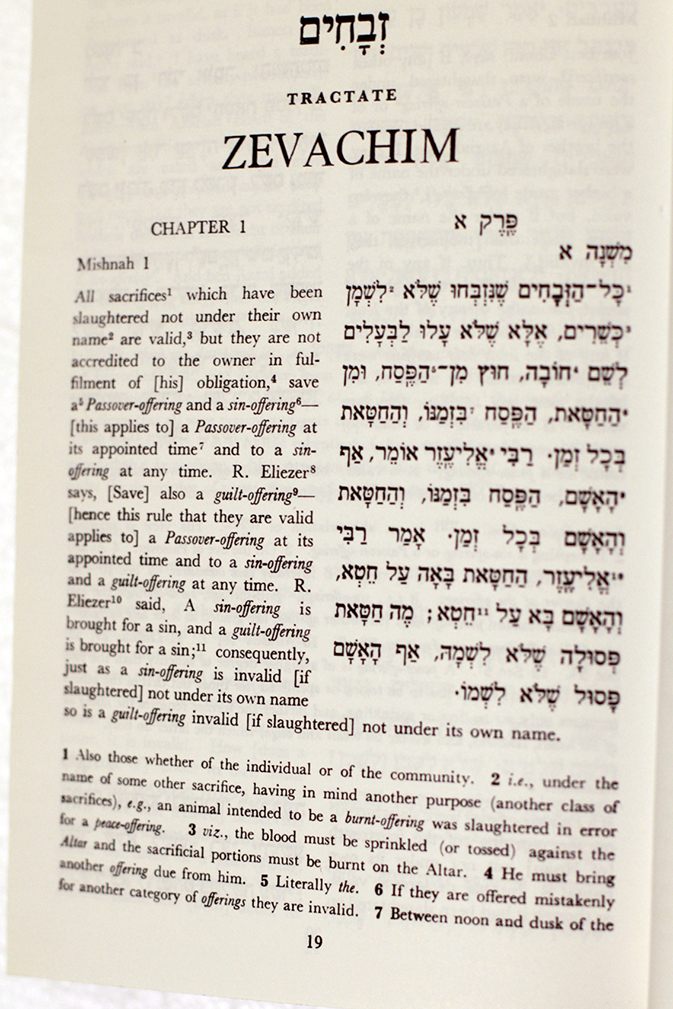
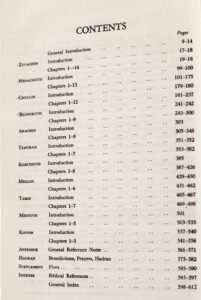
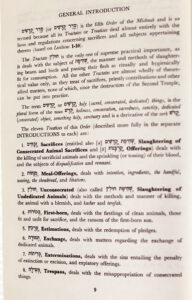
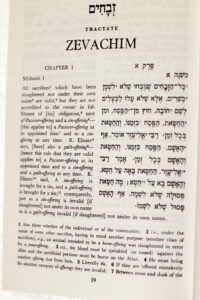
Zevachim (“Sacrifices”), with fourteen chapters, and originally called Shehitat Kodashim (“slaughtering of the holy animals”) deals with the sacrificial system of the Temple period, namely the laws for animal and bird offerings, and the conditions which make them acceptable or not, as specified in the Torah, primarily in the book of Leviticus (Lev 1:2 and on).
Menachot (“Meal Offerings”), comprising thirteen chapters, deals with the rules regarding the preparation and presentation of grain-meal and drink offerings, including the meal-offering that was burnt on the altar and the remainder that was consumed by the priests as specified in the Torah (Lev 2:1 and on); the bringing of the omer of barley (Lev 23:10), the two loaves (Lev 23:17), and the showbread (Lev 24:5).
Hullin or Chullin (“Ordinary or Mundane”), also called also Shehitat Hullin (“slaughtering of non-consecrated animals”), has twelve chapters and deals with the laws for slaughtering animals and birds for meat for ordinary use, as opposed to sacred use, with other rules relating to the eating of meat, and with the dietary laws in general.
Bekhorot (“Firstborns”), consists of nine chapters and deals mainly with the sanctification and redemption of human and animal firstborns, as specified in the Torah (Ex 13:2, 12–13, Num 18:15–17 and Deut 15:19–23), and the tithing of cattle (Lev 27:32–33).
Arakhin (“Dedications” or “Estimations”), with nine chapters, deals with the rules for determining the amount which must be paid in fulfilment of a vow to dedicate to the Temple the ‘market-value’ or ‘worth’ of a person, field or object in accordance with the Torah (Lev 27:1–34), or voluntary contributions to the upkeep of the Temple, and also with laws relating to the Jubilee year (Lev 25:8).
Temurah (“Substitution”), comprising seven chapters, outlines the rules about the substitution of one sacrificial animal for another in accordance with the Torah’s instructions (Lev 27:10).
Keritot (“Excisions”), with six chapters, deals with the transgressions for which the penalty is karet, meaning, sins punishable by premature or sudden death, or being cut off from the community of Israel, if done deliberately, and the type of sin-offering sacrifice that had to be offered to effect atonement if the transgression was committed in error.
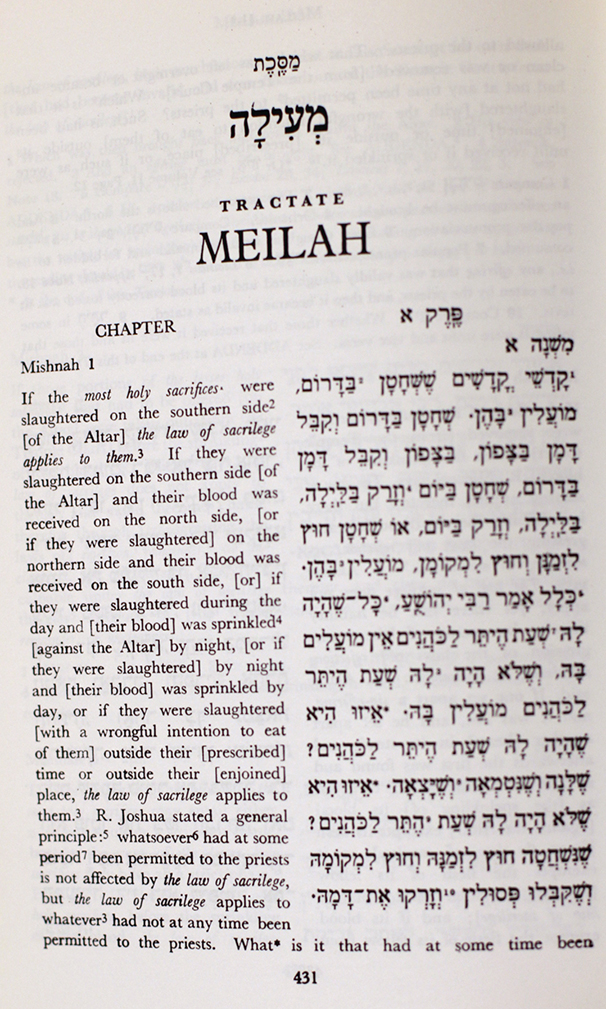
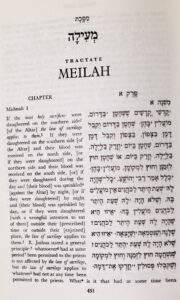
Me’ilah (“Sacrilege” or “Trespass”), with six chapters, deals with laws concerning disrespectful treatment of property belonging to the Temple or using holy objects in a prohibited manner, and with restitution for the misappropriation of Temple property, in accordance with Lev 5:15–16.
Tamid (“The Daily Sacrifice”, lit. “The Continual [Offering]”), with seven chapters (in most editions), outlines the Temple service for the daily morning and evening sacrifice, known as the Korban Tamid, in accordance with the Torah (Ex 29:38–42 and Num 28:2–8).
Middot (“Measurements” or “Dimensions”), comprises five chapters containing descriptions of the Second Temple’s architecture including its courts, gates and halls; its furnishings such as the Altar; and an account of the service of the priestly workshifts in the Temple.
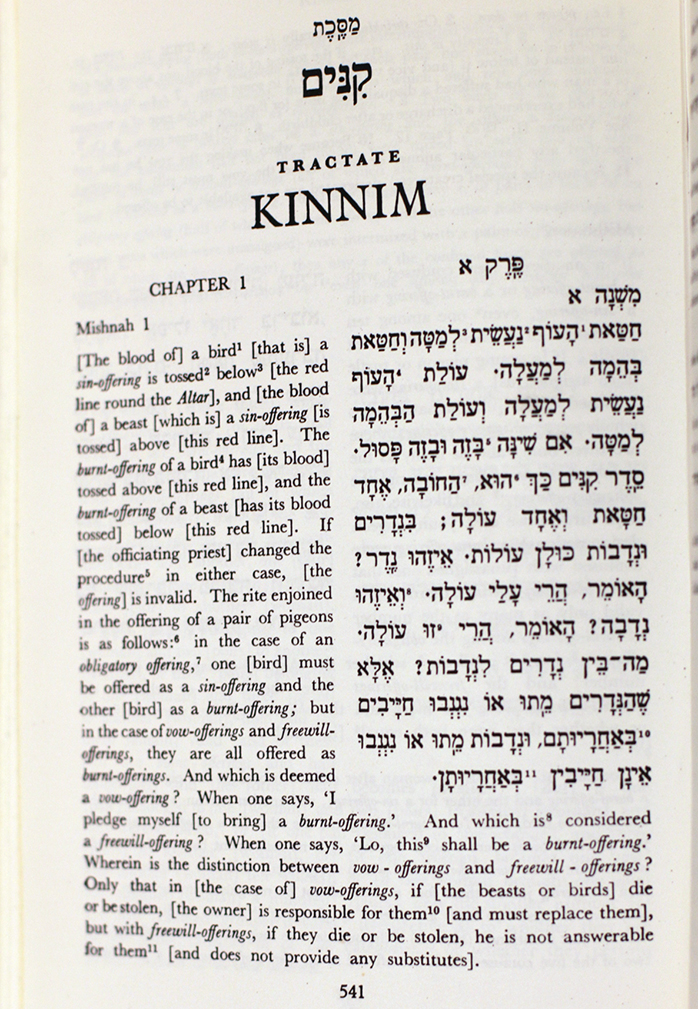
Kinnim (“Nests”), with three chapters, deals with the instructions regarding the offering of birds, in penitence for certain offences and certain conditions of uncleanness, as described in the Torah (Lev 1:14, Lev 5:7and Lev 12:8); and discusses the case in which birds belonging to different persons or to different offerings have become mixed up with one another; the name of the tractate (nests) refers to the pairs of birds prescribed in the Torah as offerings (Lev 5:1–10).
Reviews
There are no reviews yet.