
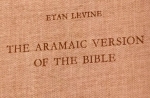

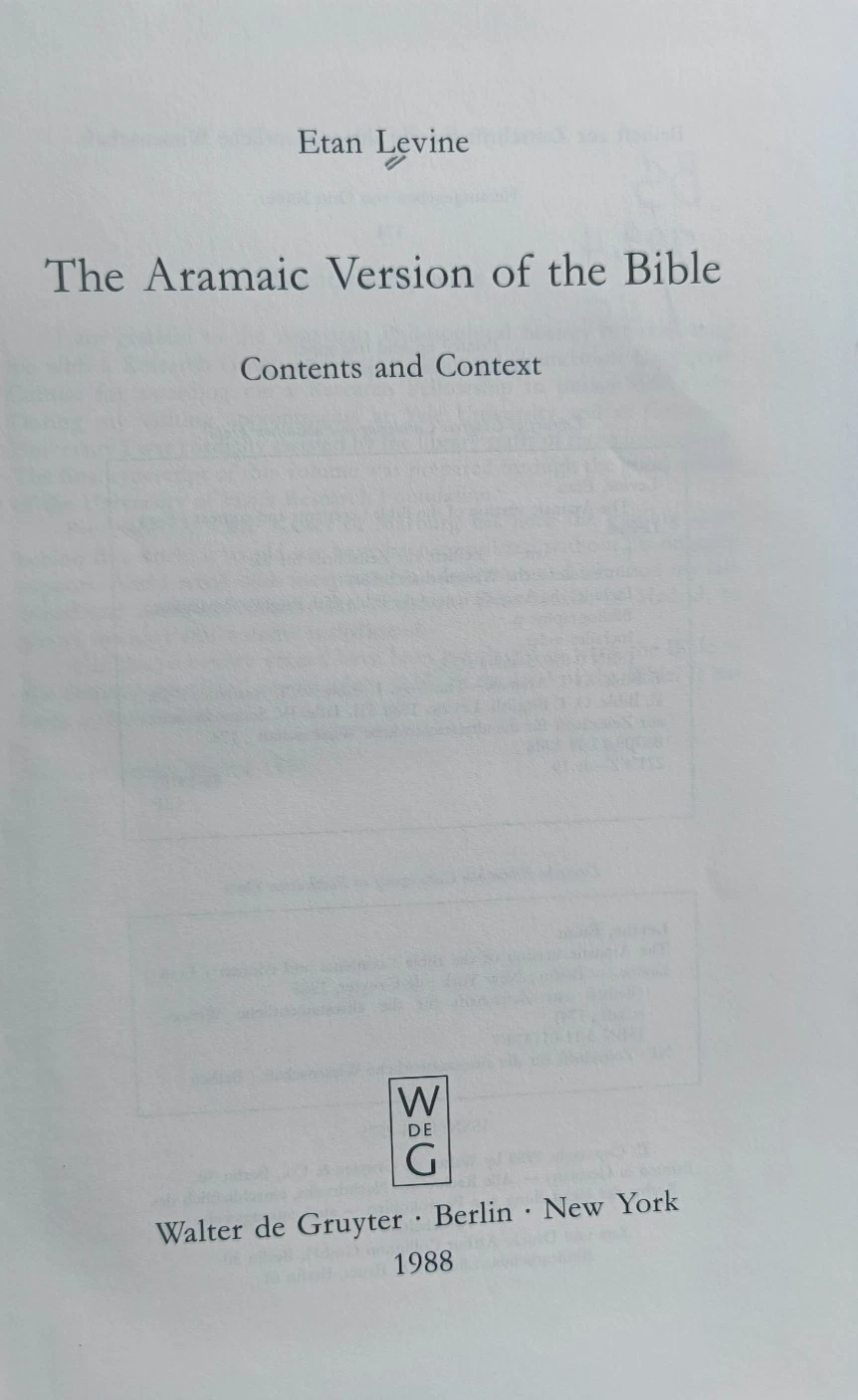

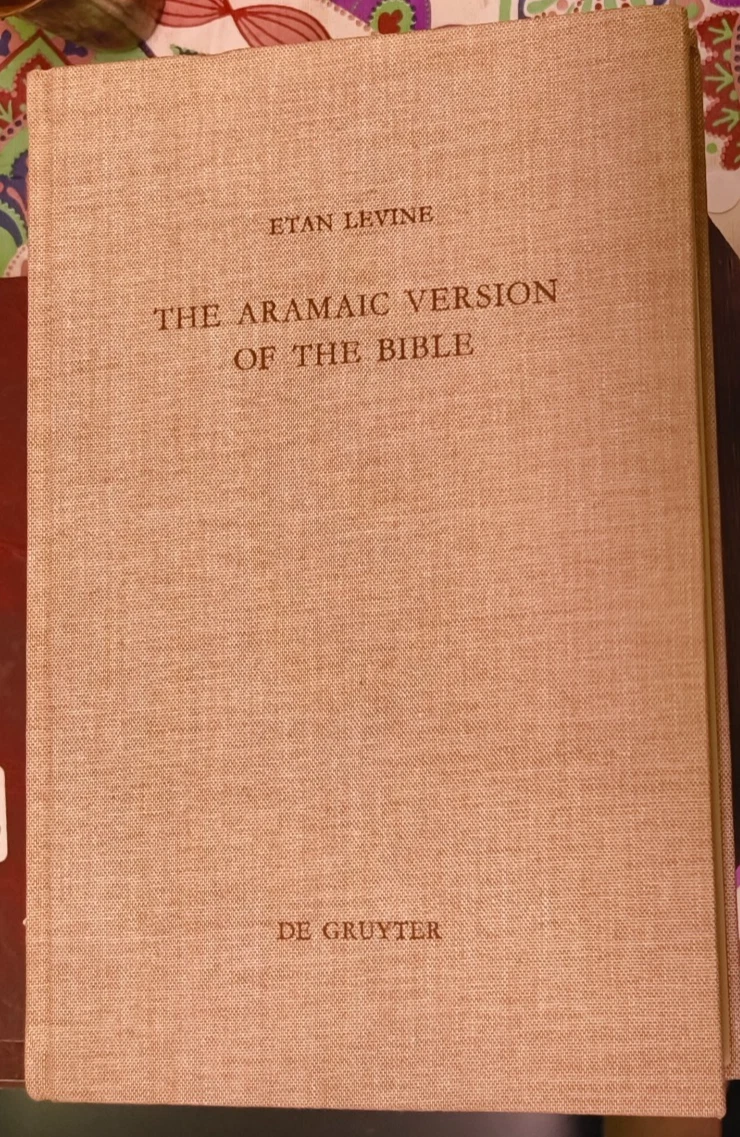


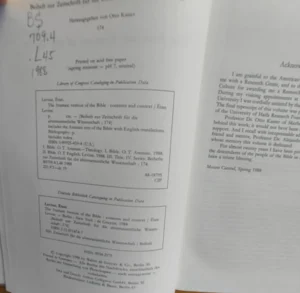
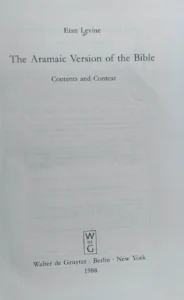


The Aramaic Version of the Bible Contents and Context Etan Levine Walter de Gruyter

$47.00

“Ex-Library. Very Good” Free Shipping and Returns (USA)
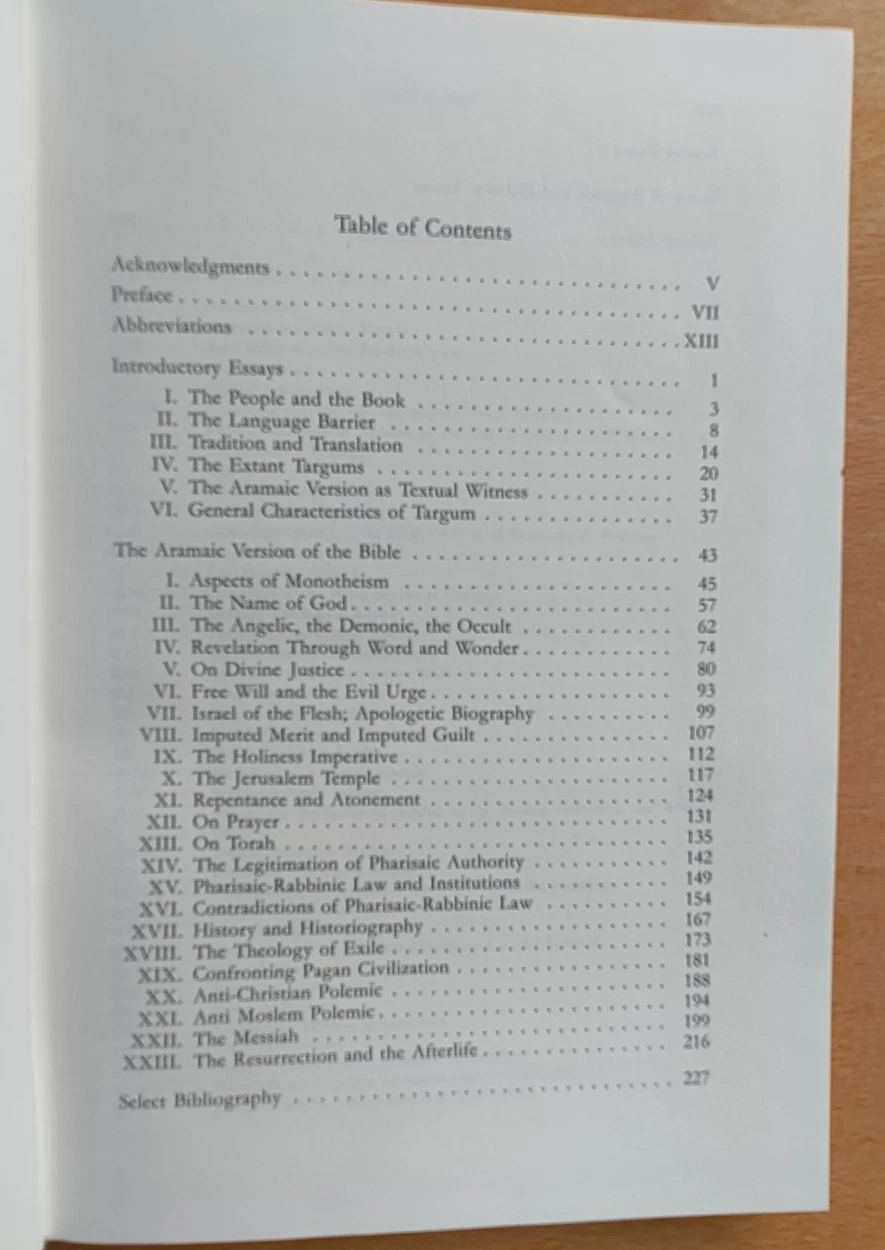
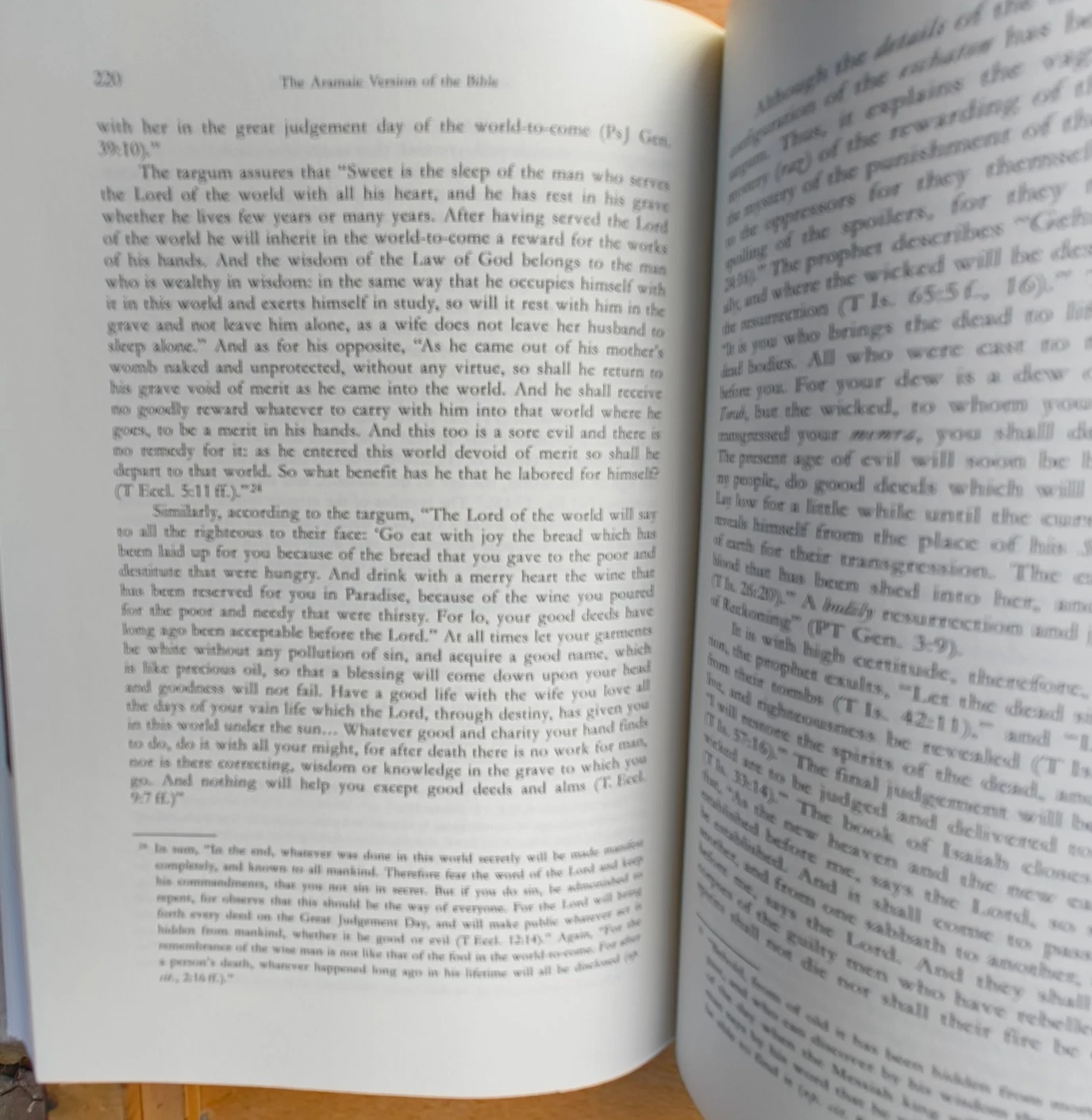
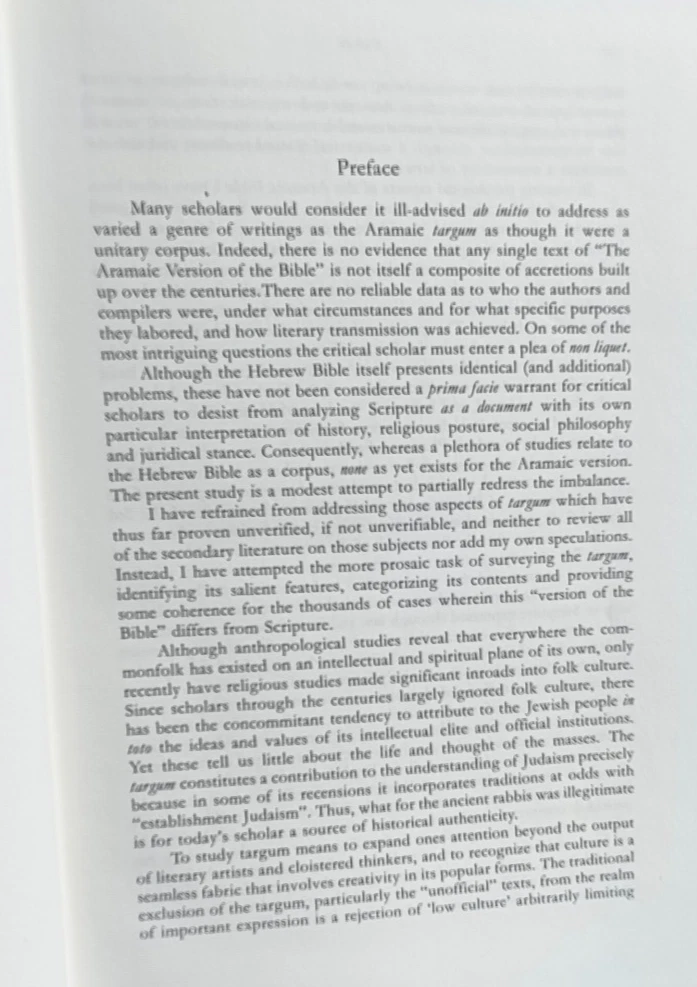
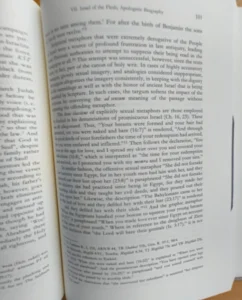
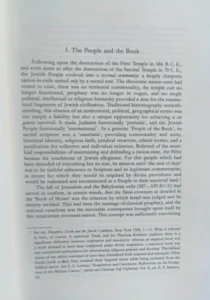
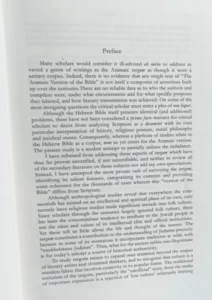
The Aramaic Version of the Bible: Contents and Context by Etan Levine (published in 1988) provides a scholarly introduction to the Targumim—the Aramaic translations and paraphrases of the Hebrew Bible. Rather than treating these texts as mere translations, Levine analyzes them as vital historical documents that reflect how the Bible was interpreted, taught, and lived by Jews in late antiquity.
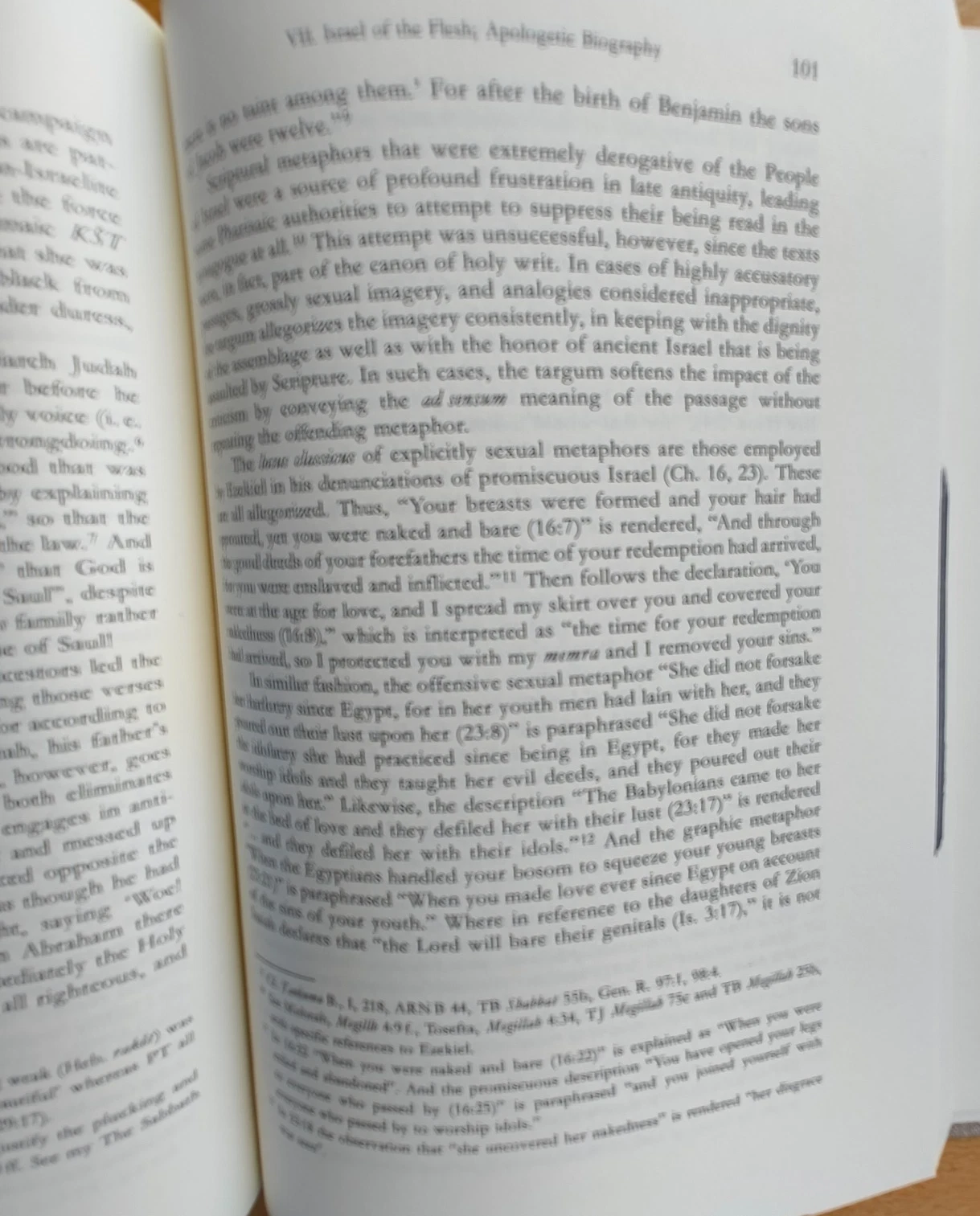
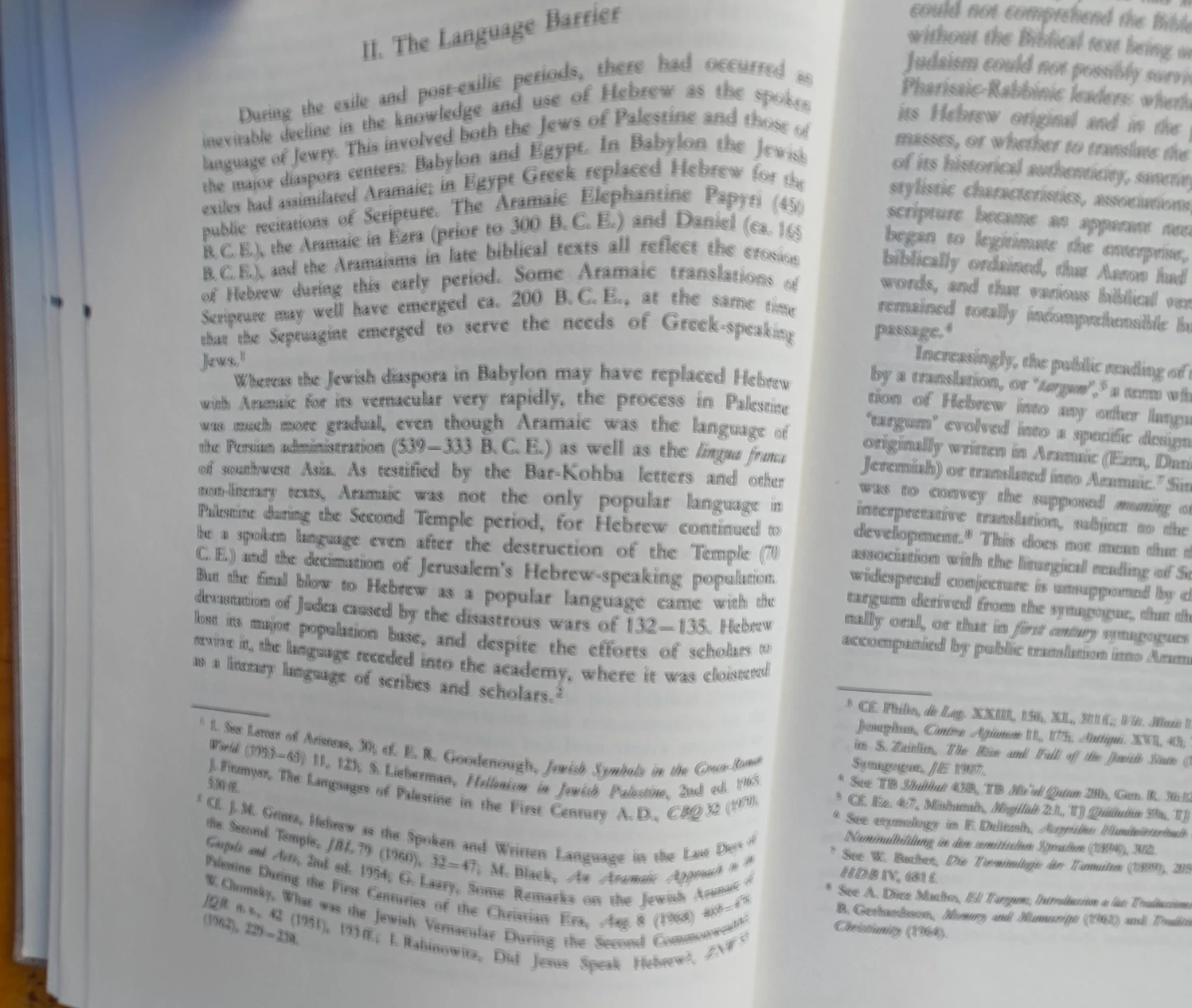
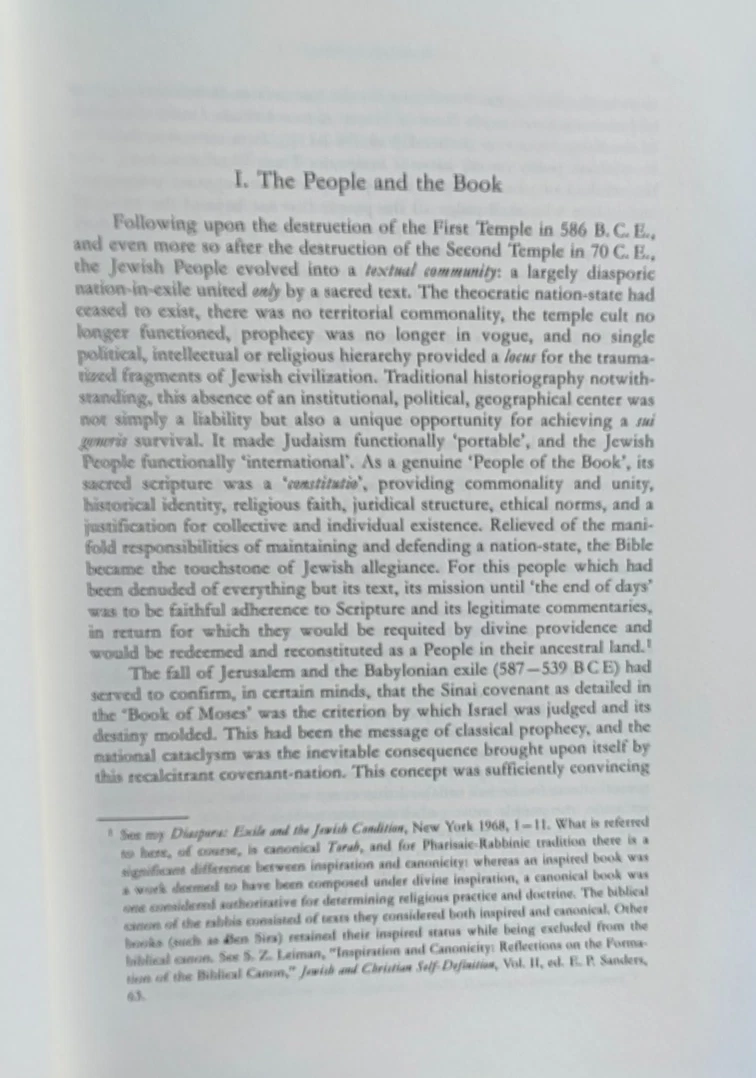
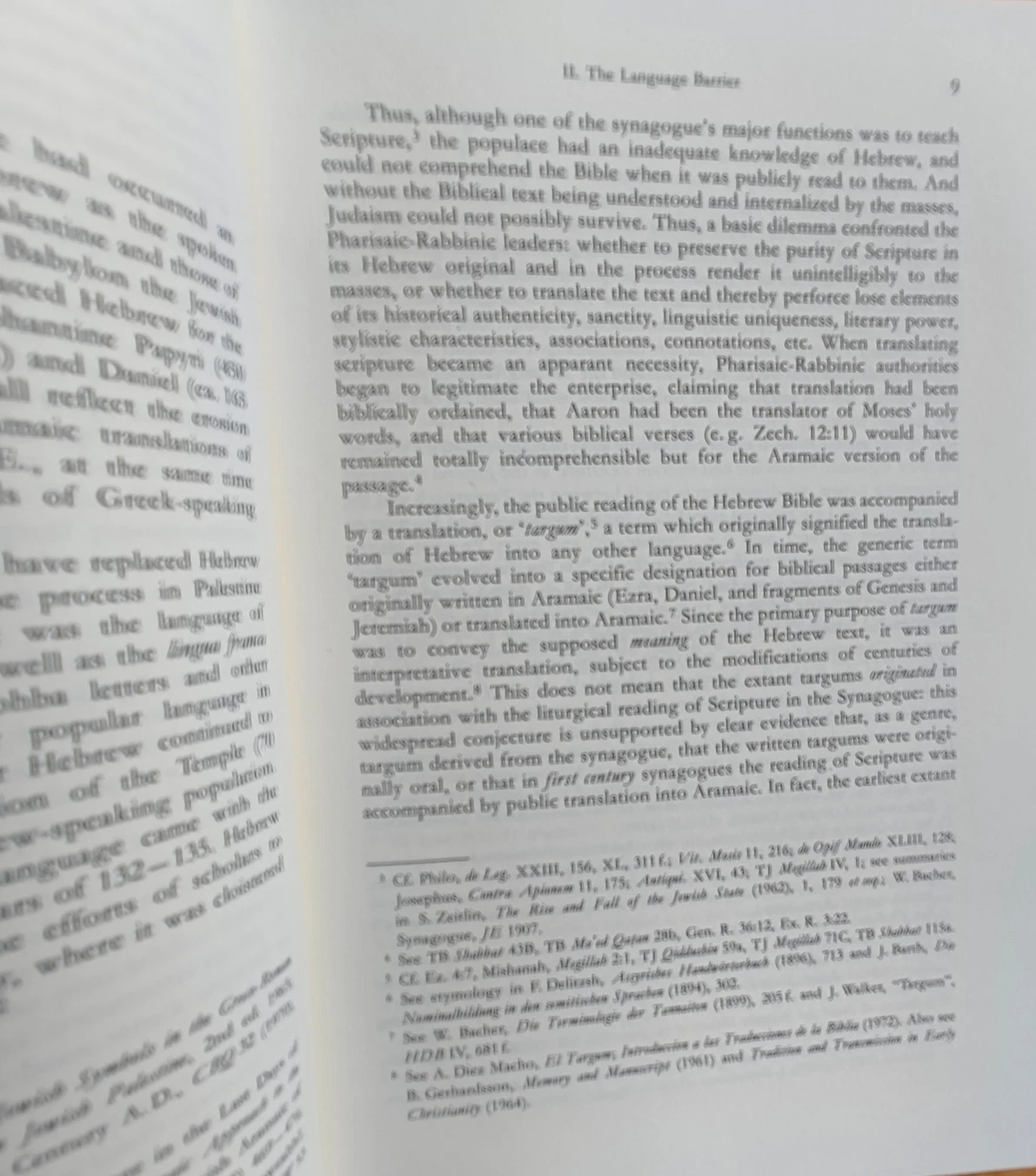
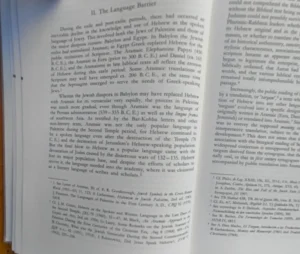
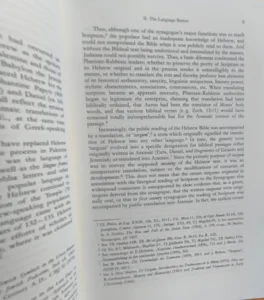
Levine explores the shift from Hebrew to Aramaic as the primary language of the Jewish people and how this necessitated a “living” translation:Exegetical Nature: He explains that the Targumim are often “interpretive translations.” They do not just translate words; they insert contemporary theology, folklore, and legal explanations into the biblical text to make it relevant to the synagogue audience.
Cultural Context: The book examines the social setting of the Meturgeman (the official translator in the synagogue), who acted as a bridge between the sacred Hebrew text and the Aramaic-speaking public.
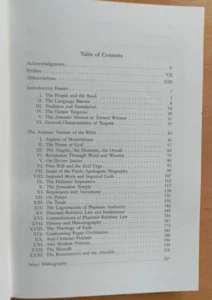
Historical Development: Levine traces the evolution of different Targumic traditions, such as Targum Onkelos (Pentateuch) and Targum Jonathan (Prophets), highlighting how they reflect the religious environment of Roman and Byzantine Palestine and Babylonia.

Description

“Ex-Library. Very Good” Free Shipping and Returns (USA)
The Aramaic Version of the Bible: Contents and Context by Etan Levine (published in 1988) provides a scholarly introduction to the Targumim—the Aramaic translations and paraphrases of the Hebrew Bible. Rather than treating these texts as mere translations, Levine analyzes them as vital historical documents that reflect how the Bible was interpreted, taught, and lived by Jews in late antiquity.
Levine explores the shift from Hebrew to Aramaic as the primary language of the Jewish people and how this necessitated a “living” translation:Exegetical Nature: He explains that the Targumim are often “interpretive translations.” They do not just translate words; they insert contemporary theology, folklore, and legal explanations into the biblical text to make it relevant to the synagogue audience.
Cultural Context: The book examines the social setting of the Meturgeman (the official translator in the synagogue), who acted as a bridge between the sacred Hebrew text and the Aramaic-speaking public.
Historical Development: Levine traces the evolution of different Targumic traditions, such as Targum Onkelos (Pentateuch) and Targum Jonathan (Prophets), highlighting how they reflect the religious environment of Roman and Byzantine Palestine and Babylonia.

Reviews

There are no reviews yet.

Be the first to review “The Aramaic Version of the Bible Contents and Context Etan Levine Walter de Gruyter”

Your email address will not be published. Required fields are marked *